


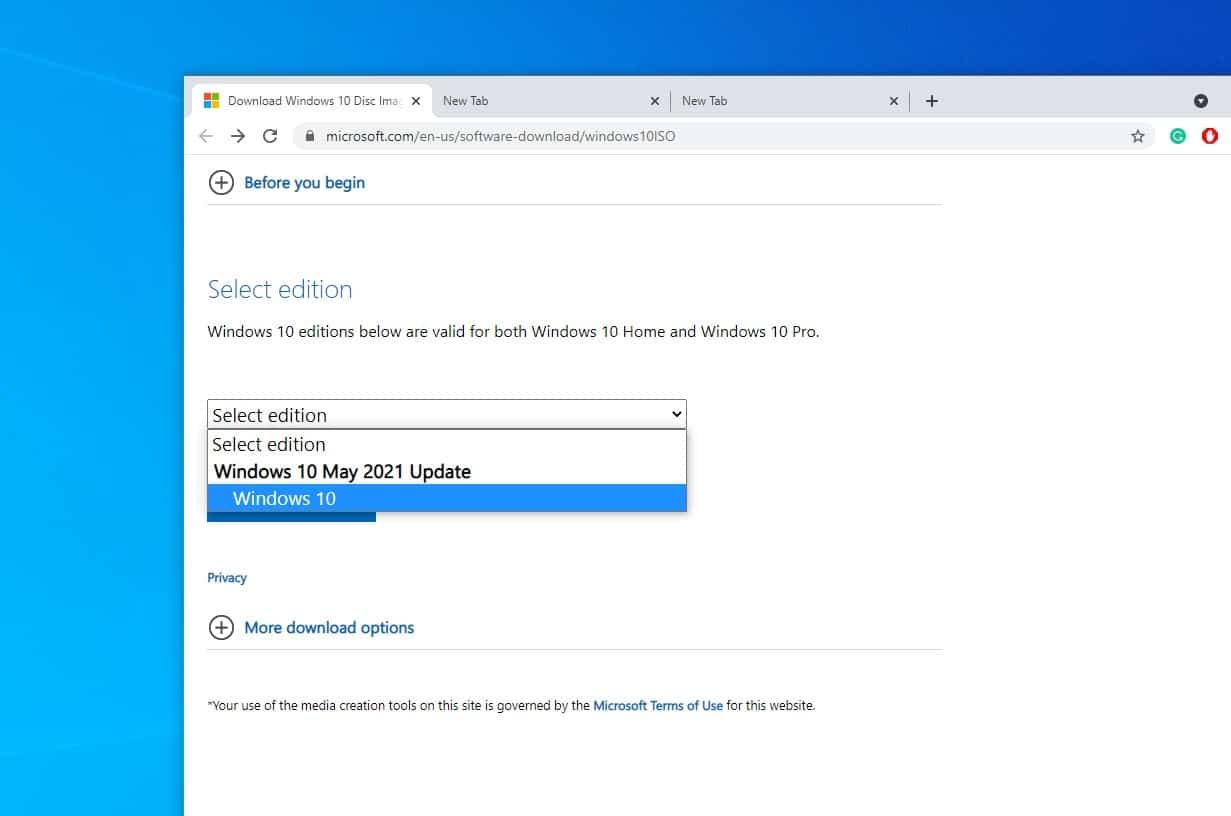
Microsoft Windows 10 is one of the most widely used operating systems globally, known for its user-friendly interface, security features, and regular updates. Recently tech giant released Windows 10 version 22H2 with a number of new features and improvements. You can check for Windows updates to download and install the latest build, windows 10 ISO image files also available for download. An ISO image of Windows 10 allows users to create installation media for clean installations or upgrades. Here’s a detailed guide on how to download the latest Windows 10 ISO image from Microsoft server.
What is the size of Windows 10 ISO?
Like the previous release, Windows 10 22H2 is a minor feature update and the update will be delivered by way of an enablement package. For existing devices running Windows 10 version 21H2, the installation process will be instant and the build number will bump by one digit (from Build 19044 to Build 19045).
Also While downloading the Windows 10 ISO we noticed its Windows 10 64-bit ISO is 5.8GB, and the 32-bit ISO is 3.9 GB which means it should not be downloaded on metered/limited data connection.
Windows 10 system requirements
Here are the minimum system requirements for installing the latest Windows 10
- Processor: 1GHz or faster CPU or System on a Chip (SoC).
- RAM: 1GB requirement for 32-bit or 2GB for 64-bit.
- Hard drive: 32GB clean install or new PC (16 GB for 32-bit or 20 GB for 64-bit existing installation).
- Graphics: DirectX 9 or later with WDDM 1.0 driver.
- Display resolution: 800×600 minimum requirement.
- Networking: Wi-Fi or Ethernet adapter.
How to Download Windows 10 ISO
Microsoft has a dedicated landing page for Windows 10 ISO files, which lets you download both the 32-bit and 64-bit Windows 10 ISO image files. The only issue is that when you use a Windows 10 device to download the ISO from the Microsoft support website, you’re only given the choice to get the “Update Assistant” or “Media Creation Tool.”
If you don’t want to go through the extra steps, (“Update Assistant” or “Media Creation Tool). Here is How to download the ISO file of Windows 10 directly from the Microsoft servers without having to use the Media Creation Tool.
Using Google Chrome
All you need to do is open developer tools in the web browser.
- First, visit the Microsoft support site https://www.microsoft.com/en-us/software-download/windows10ISO.
- Just press the F12 key to access the Chrome developer tools.
- Or you can access the developer tool from, three dots menu (…) -> More tools -> Developer Tools.
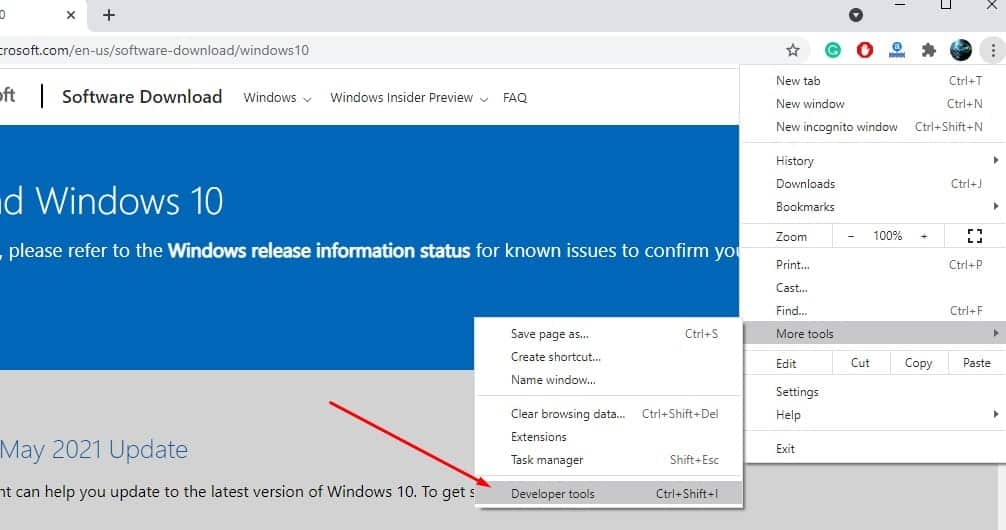

- Once the developer tool appears on the screen, click on the mobile phone icon (refer image below)
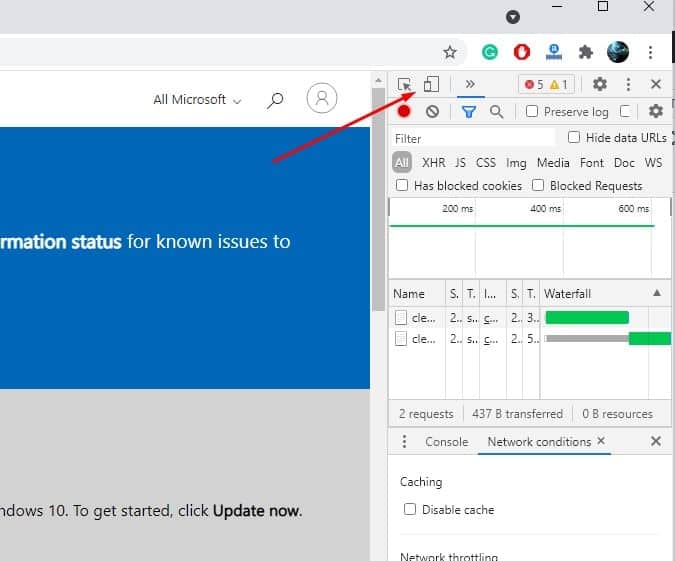

- Then refresh the page to download the ISO images.
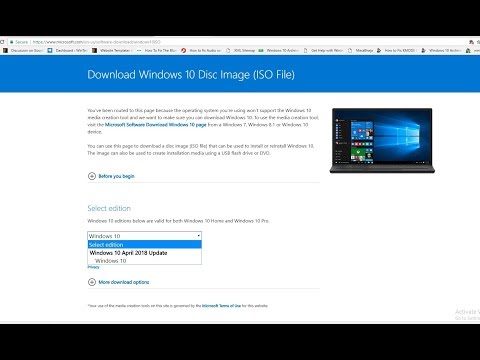
- Here Select Windows 10.
- Next, select your Product language as per your requirement.
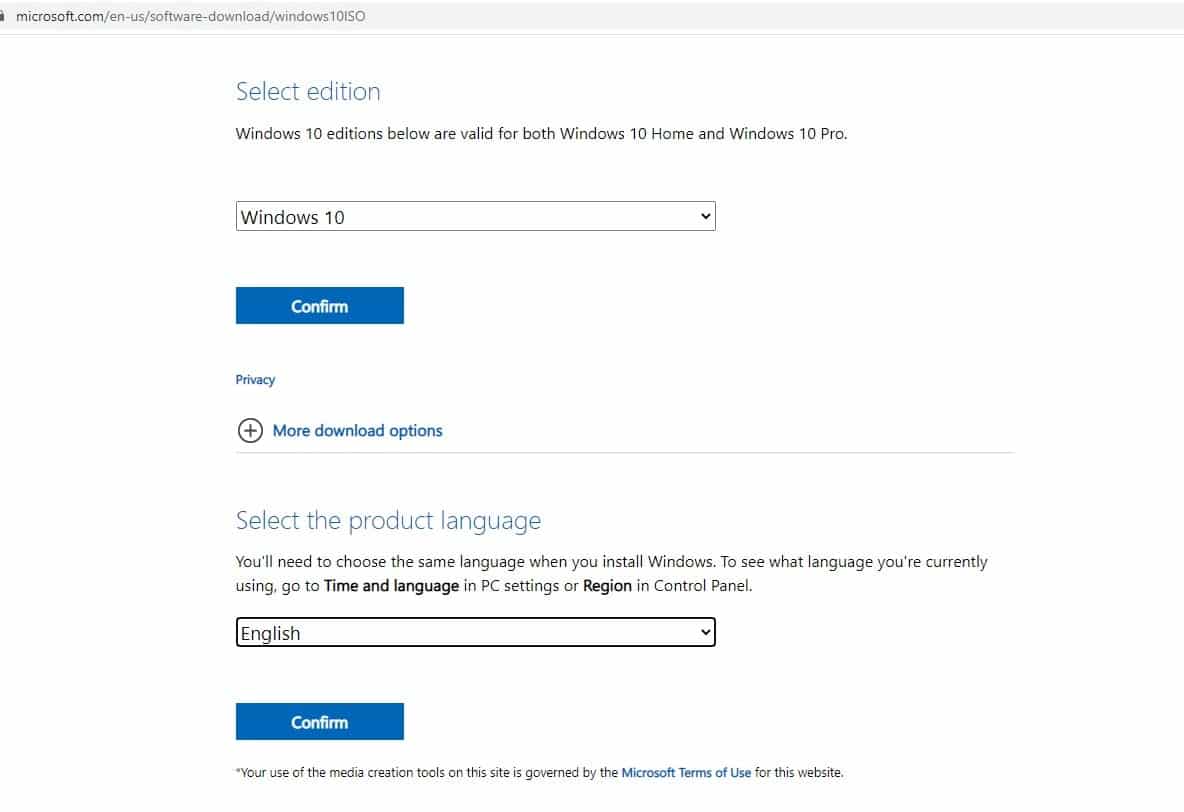

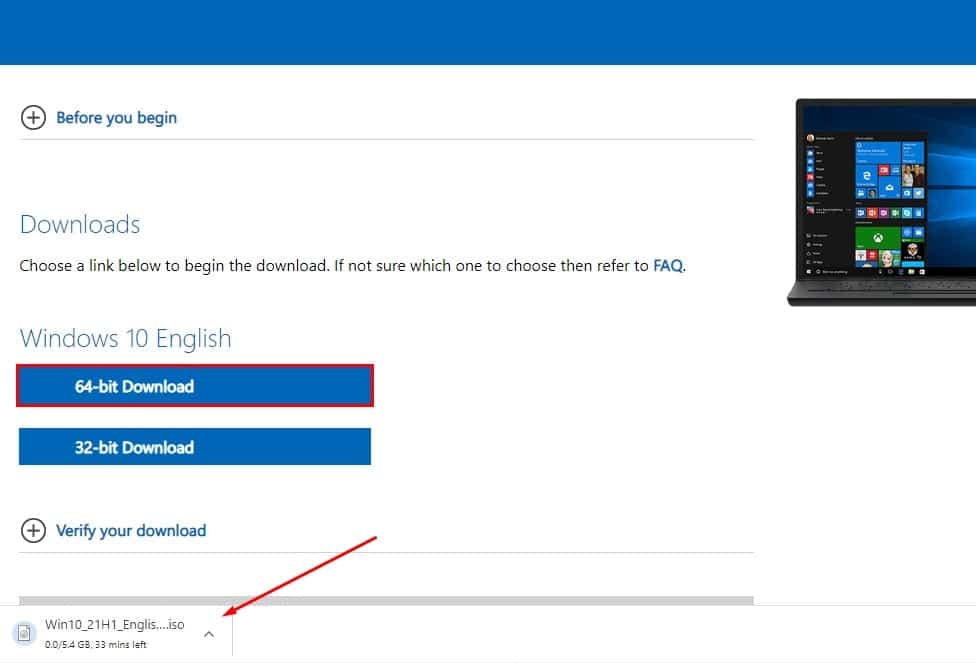
- Now Select 64-bit or 32-bit ISO as per your requirement.
- When you click on it this will start the downloading process as shown image below.

If you face any difficulty, refer to this video to download the Windows 10 ISO image file directly from the Microsoft server.
After that, create an installation media or Bootable USB device to use for Windows 10 Standalone installation.
Windows 10 ISO download link
Here are the direct download links to download Windows 10 ISO Image with one click.
Note: We will update these links whenever there is a new version of Windows 10 ISO 64-bit or 32-bit available to download from Microsoft.
What’s new on Windows 10 Update?
Windows 10 version 22H1 feature update is a very small release and does not bring too many new features. It mainly focuses on performance and security enhancements that will improve the operating system’s overall experience, Some of the noted changes are the following.
- Start Menu: The Start Menu combines the familiarity of Windows 7 with live tiles from Windows 8, providing quick access to applications and information.
- Cortana: Microsoft’s virtual assistant, Cortana, offers voice commands and personalized assistance, enhancing productivity.
- Microsoft Edge: Windows 10 includes Microsoft Edge as the default web browser, offering better performance, security, and features compared to Internet Explorer.
- Security Enhancements: Windows 10 incorporates advanced security features such as Windows Defender Antivirus, Windows Hello biometric authentication, and Windows Information Protection (WIP) to safeguard user data and privacy.
- Continuum: This feature allows seamless transition between desktop and tablet modes, providing a consistent experience across devices.
- Virtual Desktops: Users can create multiple virtual desktops to organize and switch between different tasks and applications efficiently.
- Windows Update: Windows 10 delivers regular updates and feature enhancements to ensure system stability, security, and performance.
Also, Read


