what is an IP address in networking

If you use the internet, you’ve probably come across the term IP address. Every time you visit a website, watch YouTube, or send a WhatsApp message, your device is using an IP address in the background. But what exactly IP Address, and why does it matter so much in networking? It’s like when you want to send a letter to a friend, you write their home address on the envelope so the postal service knows where to deliver it. In the digital world, the IP (Internet Protocol) address works the same way—it tells the internet where to send the information you request. Without IP addresses, the internet would be like a city without street names or house numbers.

In this article, you will learn: 

  • What an IP address is and why it exists.
  • The difference between IPv4 and IPv6.
  • Public vs private IPs, and static vs dynamic IPs.
  • How your device actually gets its IP address.
  • Why IP matters for security, privacy, and troubleshooting.

What Is an IP Address in Networking?

IP stands for Internet Protocol, is a unique number assigned to every device connected to a network so devices can identify each other and exchange data. This includes not just your phone or laptop but also servers, routers, printers, smart TVs, and even IoT gadgets like smart bulbs. Just like a home address directs a package to the right house, an IP address guides data packets to the right device across the internet.

When you type a web address like google.com, your request travels across the internet using IP addresses.

request travels across the internet

Your device sends out a data packet with two important labels:

  • Source IP: Your device’s address (where the data comes from).
  • Destination IP: The server’s address (where the data needs to go).

Routers along the way read the destination IP and forward your request closer and closer until it finally reaches the right server. That server then replies back to your source IP your device.

So, in simple terms, IP addresses make sure information travels to the right place and back again.

What is the Purpose of an IP Address?

The primary purpose of an IP (Internet Protocol) address is to identify devices on a network and enable communication between them over the Internet or a local network. Without it, devices would have no way to find each other on a network.

  • Device Identification – Every device connected to a network (e.g., computers, smartphones, servers, IoT devices) is assigned a unique IP address. This ensures each device can be distinctly recognized on the network.
  • Location Addressing – An IP address specifies the network location of a device, much like a street address for homes. This allows data to be directed to the correct destination.
  • Data Routing – When data is sent over the internet (e.g., loading a webpage or sending an email), it is broken into packets. Each packet contains the source and destination IP addresses. Routers use this information to forward packets across networks until they reach the intended device.
  • Network Communication – IP addresses enable devices to communicate with each other using standardized protocols (like TCP/IP), forming the foundation of internet and local network connectivity.

What IP Addresses DO ✅

What IP Addresses DO NOT DO ❌
1. Uniquely identify devices on a network (like a digital address).❌ Identify a person or organization directly — they identify devices, not individuals.
2. Enable data routing by specifying the source and destination for packets across networks. Guarantee delivery of data — IP is connectionless; reliable delivery is handled by protocols like TCP.
3. Provide network location information to help routers forward traffic efficiently.❌ Ensure security on their own — IP addresses can be spoofed or hidden; they are not secure identifiers.
4. Support communication over the internet and local networks using standardized protocols (IPv4/IPv6). Reveal precise physical location — they can estimate location (city/country), but not exact street addresses.
5. Facilitate network management through subnetting, NAT, and private addressing.❌ Stay permanently tied to one device — most IP addresses (especially public ones) are dynamic and change over time.
6. Enable access control (e.g., firewalls use IPs to allow/block traffic). Work independently of other protocols — IP relies on protocols like TCP, UDP, and ICMP to function fully.

IPv4 vs IPv6: What’s the Difference?

There are two main versions of IP addresses used today: IPv4 and IPv6.

IPv4 (Internet Protocol version 4) – The Old but Still Everywhere

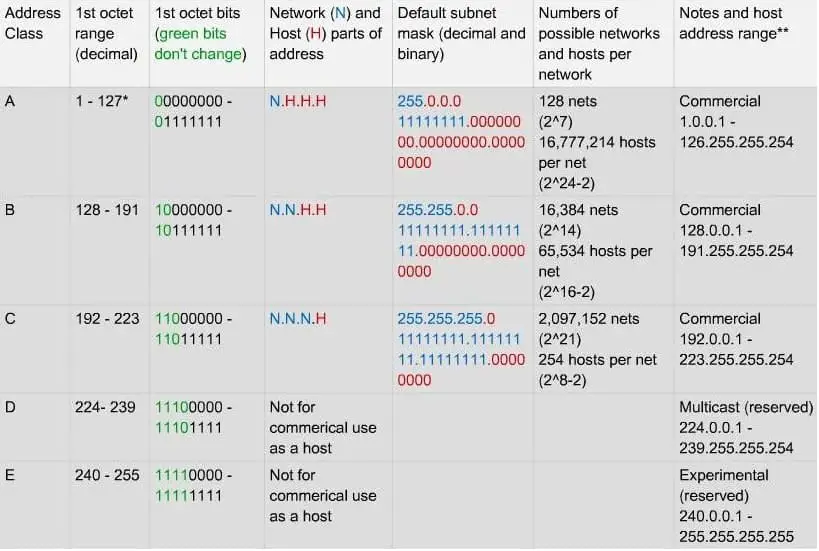
IPv4 was introduced in 1983 the early days of the Internet. It uses a 32-bit format, represented in decimal notation, such as 192.158.1.38. It provides approximately 4.3 billion unique addresses. However, with the massive growth of internet-connected devices, IPv4 addresses are running out.

To keep things working, we’ve been using tricks like NAT (Network Address Translation), where many devices inside your home or office share one public IP provided by your ISP.

IPv6 (Internet Protocol version 6) – The Future of the Internet

To solve this limitation, IPv6 was created. It uses a 128-bit format, represented in hexadecimal notation, such as 2001:db8:85a3::8a2e:370:7334. It allows for trillions of unique addresses, enough to give every device on earth (and probably on Mars in the future) its own unique IP.

Introduced to solve the IPv4 shortage, IPv6 uses a 128-bit address represented in hexadecimal notation, such as 2001:db8:85a3::8a2e:370:7334. It allows for trillions of unique addresses, improved security, and more efficient routing.

IPv6 not only increases the available addresses but also makes routing more efficient and restores the original design of the Internet, where every device can directly connect to every other device without NAT in between.

Note: IP addresses are assigned by the Internet Assigned Numbers Authority (IANA), a subsidiary of the Internet Corporation for Assigned Names and Numbers (ICANN), a nonprofit organization based in the US.

What is a public IP address?

A public IP address is the one that your ISP (Internet Service Provider) provides to identify your home network to the outside world. It is an IP address that is unique throughout the entire Internet. A web server, email server and any server device directly accessible from the Internet use public IPs so that users can connect from anywhere. Depending on your service, you might have an IP address that never changes (a fixed, or static IP address). But most ISPs provide an IP address that can change from time to time (a dynamic IP address). For the vast majority of users, a dynamic IP address is fine.

When you’re setting up your router, if your ISP issued you a static IP address, you enter it into your router’s settings. For a dynamic IP address, you specify DHCP in your router’s network settings. DHCP is the Dynamic Host Control Protocol. It tells your router to accept whatever public IP address your ISP issues.

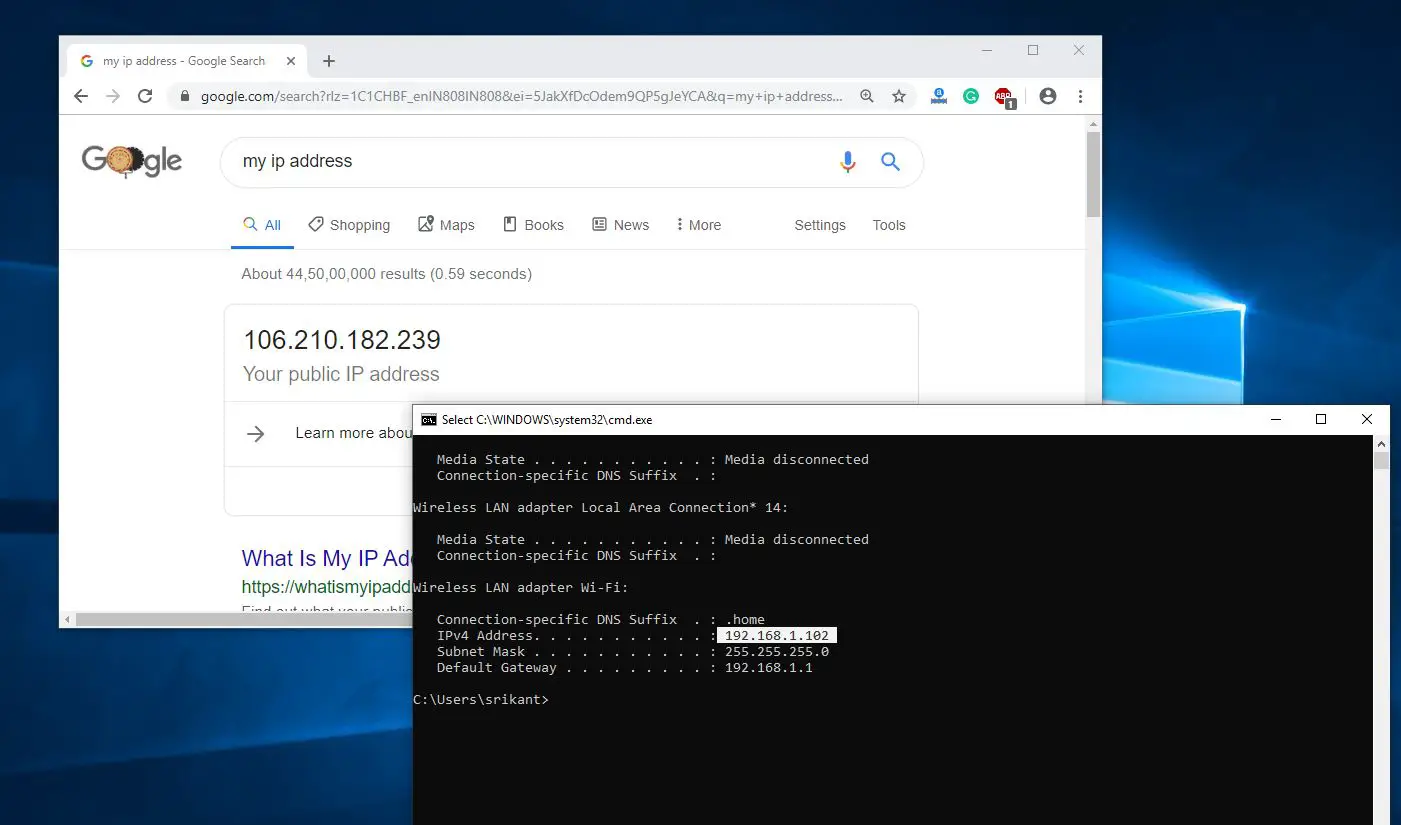
  1. To check your public IP address, you need to open google.com
  2. Type What is my IP address and hit the enter key.
  3. This will display your public IP address as shown image below.
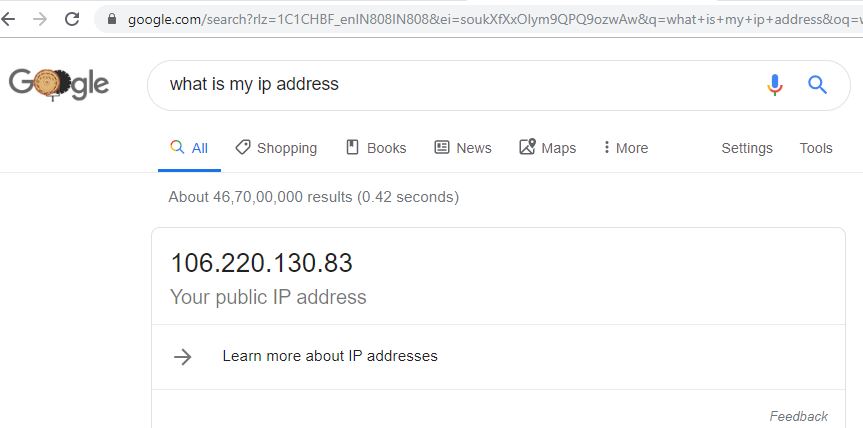
check public ip address

What is a private IP address?

Just as your network’s public IP address is issued by your ISP, your router issues private (or internal) IP addresses to each network device inside your network. This provides a unique identification for devices that are within your home network, such as your computer, your tablets, smartphones, and so on. Similar to the arrangement with public IP addresses, each device on your network has its network configuration settings on DHCP, so it can accept the unique private IP address that your router issues it.

These addresses are not unique globally—they can be repeated across different networks because they are not directly accessible from the internet.

Common ranges reserved for private IPs:

  • 10.0.0.0 – 10.255.255.255
  • 172.16.0.0 – 172.31.255.255
  • 192.168.0.0 – 192.168.255.255

Example: Most home routers assign private IPs like 192.168.1.100 to your devices.

To check the IP address of your computer?

  • Open up the Command Prompt via your Windows Start menu.
  • Type in “ipconfig” and hit Enter.
  • Look for the line that reads “IPv4 Address.”
  • The number across from that text is your local IP address
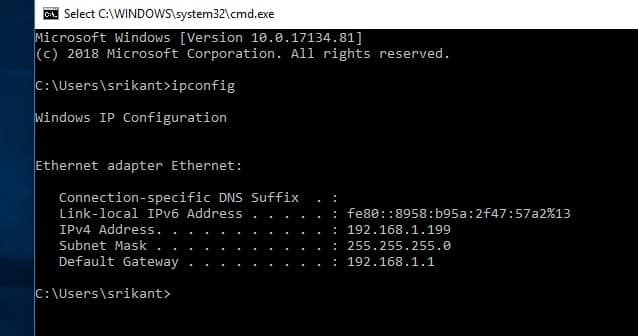
Check IP address using IPCONFIG

Private IPs keep local devices safe and reduce the need for millions of unique addresses. Your smartphone, laptop, and smart TV can all share one public IP (via your router) while having their own private IPs.

Static vs Dynamic IP Addresses

A static IP address remains the same over time and is manually configured, making it ideal for services that need a permanent address, such as websites or remote servers. In contrast, a dynamic IP address changes periodically and is automatically assigned by a DHCP (Dynamic Host Configuration Protocol) server, which is more common for home internet connections.

Static IP Address:

  • Remains unchanged unless manually modified.
  • Manually configured by a network administrator or ISP.
  • Used for hosting servers (e.g., web, email, FTP), VoIP, and reliable remote access.
  • Ensures consistent domain name resolution and uninterrupted connections.
  • Offers better geolocation accuracy and easier remote device access.
  • Typically used by businesses; it often requires an additional fee from ISPs.

Dynamic IP Address:

  • Changes automatically each time a device connects to the network (though it may sometimes appear the same).
  • Assigned automatically by a DHCP server.
  • Cost-effective and efficient for ISPs, making it standard for residential users.
  • Enhances security by making long-term tracking harder.
  • Ideal for everyday internet use like browsing, streaming, and online gaming.

How to Check Your IP Type: Open Command Prompt and run ipconfig /all. If “DHCP Enabled: Yes”, it’s dynamic; if “No”, it’s static.

How Your Device Actually Gets Its IP Address

When you connect your phone, laptop, or smart TV to the internet, it needs an IP address to communicate. Here’s how the process works:

  • Connecting to a Network – When you join Wi-Fi or plug into Ethernet, your device sends a request for an IP.
  • DHCP Assignment – Your router (or ISP server) uses DHCP to assign a free IP address.
  • NAT (Network Address Translation) – If you’re on a private IP, your router translates it into the public IP when accessing the internet.
  • Renewal or Release – Dynamic IPs can expire and be reassigned. Your device will automatically request a new one.

This process happens in seconds, which is why you usually don’t notice it.

Why IP Addresses Matter for Security, Privacy, and Troubleshooting

IP addresses aren’t just technical numbers—they play a huge role in your digital safety and experience.

  • Security – Hackers can attempt to exploit exposed IP addresses, especially static ones. Firewalls, VPNs, and ISPs use IP tracking to block malicious activity.
  • Privacy – Your public IP reveals your approximate location and ISP. That’s why advertisers, websites, or even attackers can sometimes track you. Using a VPN (Virtual Private Network) hides your real IP.
  • Troubleshooting – IT professionals often use IP addresses to diagnose issues. For example, if you can’t access a site, they may use your IP to check routing, connectivity, or whether your ISP is blocking traffic.

Domain Names and IP Addresses: The Role of DNS

When you browse the internet, you don’t usually type numbers like 172.217.160.142 to reach Google. Instead, you type google.com. This is possible because of the Domain Name System (DNS), which works like the phonebook of the internet.

DNS takes human-friendly names (like amazon.com) and translates them into IP addresses that computers understand. Without DNS, we would need to memorize long strings of numbers for every website we visit. So, the next time you type in a web address, remember that DNS is quietly working behind the scenes to connect you to the right server’s IP address.

What Happened to IPv5?

You might be wondering: if we had IPv4, why did we skip straight to IPv6? The answer is that IPv5 existed, but it was experimental. It was designed in the 1980s for streaming voice and video (known as the Internet Stream Protocol). However, it wasn’t widely adopted because it used the same 32-bit addressing as IPv4, meaning it couldn’t solve the address shortage problem.

For that reason, the internet community moved directly to IPv6, which provides a vastly larger address space and modern networking improvements.

How to Find Your Own IP Address

Checking your IP address is simple, and it helps you better understand the difference between public and private IPs.

  • On Windows: Open Command Prompt and type ipconfig. Your local IPv4 address will appear under “Wireless LAN adapter” or “Ethernet adapter.”
  • On Mac/Linux: Open Terminal and type ifconfig or ip addr show.
  • On Smartphones: Go to Wi-Fi settings → Tap your connected network → Look for IP Address.
  • Easiest method: Just type What is my IP into Google, and it will display your public IP.

Real-World Uses of IP Addresses

IP addresses are more than just technical identifiers—they have practical applications in daily life:

  • Geolocation: Websites and apps use IP addresses to estimate your location, helping services like Google Maps or Uber provide relevant results.
  • Content Restrictions: Streaming platforms like Netflix or Disney+ use IP addresses to enforce region-based content libraries.
  • Network Management: At home or in offices, devices like printers, servers, and IoT gadgets rely on IP addresses to connect and communicate within the local network.

The Future of IP Addresses

The demand for IP addresses is exploding due to the growth of IoT devices, smartphones, cloud computing, and 5G networks. IPv4 alone can’t keep up, which is why IPv6 adoption is steadily increasing worldwide.

Today, many systems use a dual stack setup, meaning they run both IPv4 and IPv6 side by side. Over time, IPv6 will likely become the global standard, offering better scalability, efficiency, and built-in security.

The transition may take years, but one thing is certain: the future of the internet depends on IPv6.

Frequently Asked Questions (FAQs)

What is the purpose of an IP address?
An IP address identifies devices on a network so data can be sent and received correctly, just like a home address ensures mail reaches the right place.

What’s the difference between IPv4 and IPv6?
IPv4 uses a 32-bit numeric format (e.g., 192.168.1.1), while IPv6 uses a 128-bit alphanumeric format (e.g., 2001:db8::1), allowing far more unique addresses.

What is the difference between public and private IP addresses?
A public IP is assigned by your ISP and is visible on the internet. A private IP is used within local networks (like your home Wi-Fi) and not directly exposed online.

What’s the difference between static and dynamic IPs?
Static IPs never change and are often used by servers, while dynamic IPs are automatically assigned by ISPs and change periodically.

How do I find my IP address?
On Windows, type ipconfig in Command Prompt. On Mac/Linux, use ifconfig or ip addr show. You can also search “What is my IP” on Google.

Can someone track me using my IP address?
An IP address reveals only an approximate location, not your exact home address. However, websites and advertisers can use it for tracking, so VPNs help protect privacy.

Also read:

Steve Ballmer
With over 7 years of experience in the IT industry, I have experience in IT support, helpdesk, sysadmin, network admin, and cloud computing. Certified in Microsoft Technologies (MCTS and MCSA) and also Cisco Certified Professional in Routing and Switching.