In 2023 Internet Privacy is important and Most of us prefer Firefox as Default web browser because of its privacy and security features. It’s the only open-source web browser that offers enhanced tracking protection, DNS over HTTPS, Phishing and malware protection, HTTPS-only mode and more that make it the most privacy-focused web browser. And the browser regularly updated with the latest bug fixes, security enhancements and speed improvements. But still, it has specific issues cause Firefox slow loading pages, Running Slow or stop responding to your clicks on the websites. A number of users report Firefox takes forever to load first page or Firefox becomes unresponsive and Firefox Keeps Freezing after update.
Contents
Why Firefox is Running slowly on my computer?
There are many possible reasons cause Firefox Keeps Freezing or slow loading web pages. It may be because running an outdated version of Firefox needs to be updated with the latest version to take advantage of the latest optimization and bug fixes.
Another probable reason can be corrupted cache and cookies, it can slow down page loading times and Deleting them can lighten the browser up and fix this problem.
Again it can be malicious browser extensions, Insufficient System Resources, Malware or Virus Infections also slow down Firefox browser performance.
How to make Firefox run faster on Windows 11
Well if you notice Firefox slow to open pages or takes forever to load the first page Update Firefox to the latest version and Clear the cache and cookies probably fix the problem and speed up Firefox browser performance.
In addition, Disable or Remove Unnecessary Add-ons, and tweak browser settings help Make Firefox Faster on Windows 11.
Well if Firefox takes forever to load first page the first thing you need to ensure you have a stable Internet connection. You can check internet speed at fast.com or speedtest.net. Here are a few tips to increase internet speed on Windows 11.
Delete Cookies and Cache
Like other web browser firefox also store browsing history, cache and cookies to speed up the web browsing experience. But over time cache files become too large or old cookies and cache can cause Firefox Running Slow or the browser takes forever to load first page.
To Clear your browsing data on Firefox:
- Open the Firefox browser on your PC, click the menu icon from the top right corner and select Settings.
- Select “Privacy and Security” on the left-hand side, scroll down and locate ”Cookies and Site Data”
- Click on Clear Data, and From the Clear Data window, select all the boxes and click Clear.
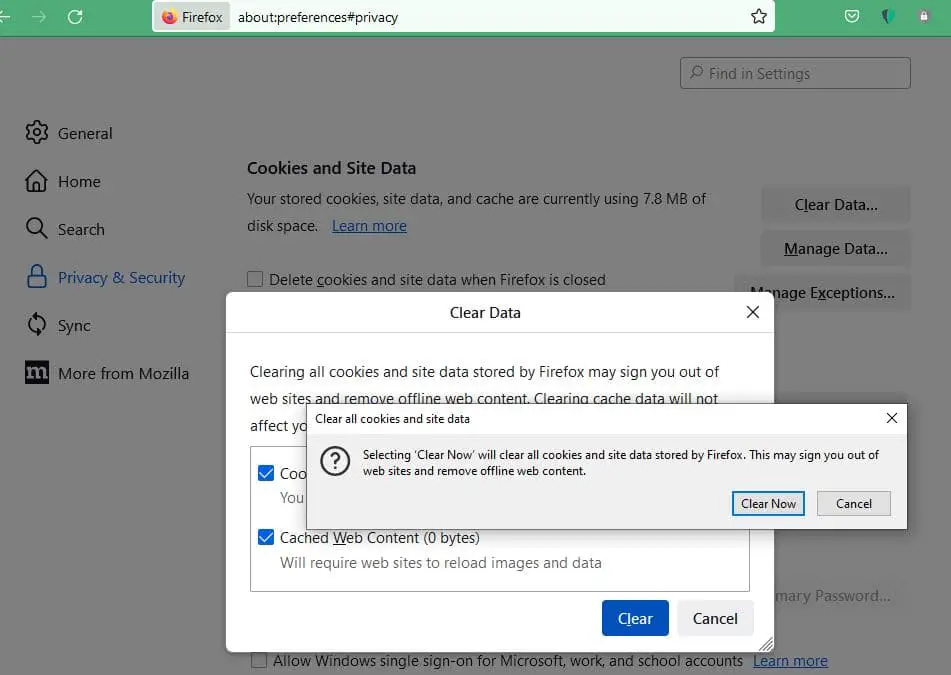
- Now, scroll further down the page to the ”History” section and Click the”Clear History” button.
- Choose the time range for everything, checkmark the box next to cookies, cache, and browsing history and click Clear now.
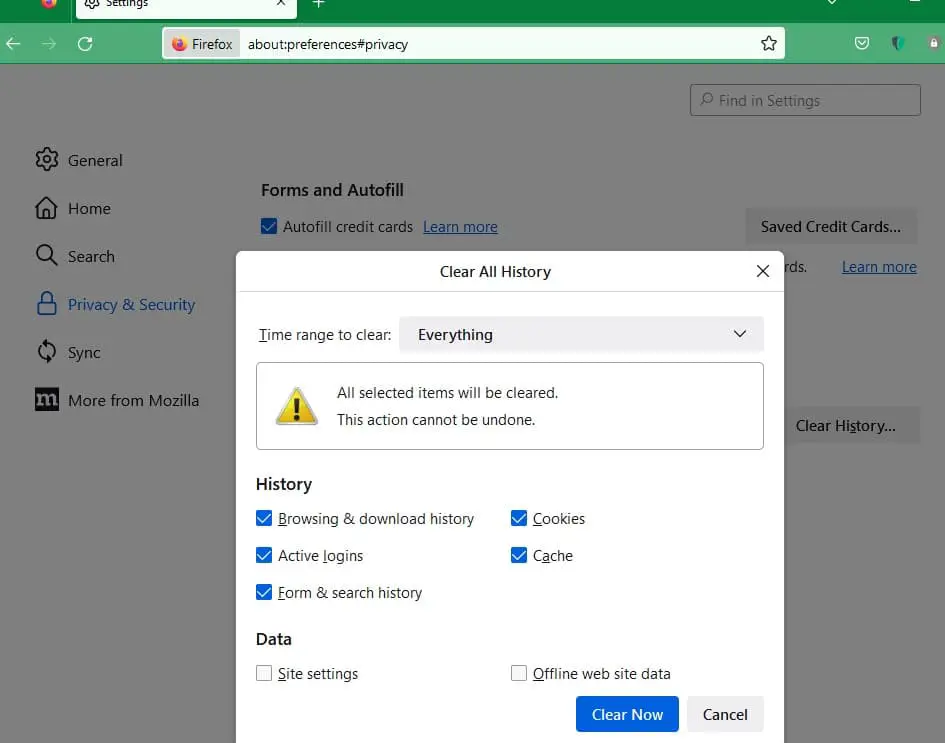
Now close and reopen the browser and check Firefox browser should be running much faster and loading webpages quickly.
Update Firefox latest version
Using an outdated or old browser can lead to slow webpage loading due to compatibility issues, missed performance enhancements, and potential security vulnerabilities. And Updating Firefox to the latest version can potentially help resolve slow loading issues.
- Open the Firefox browser on your computer.
- Click on the menu button located at the top right corner (three horizontal lines) Select “Help” then click on “About Firefox.”
- It searches for pending updates, notifies you, and installs it accordingly.
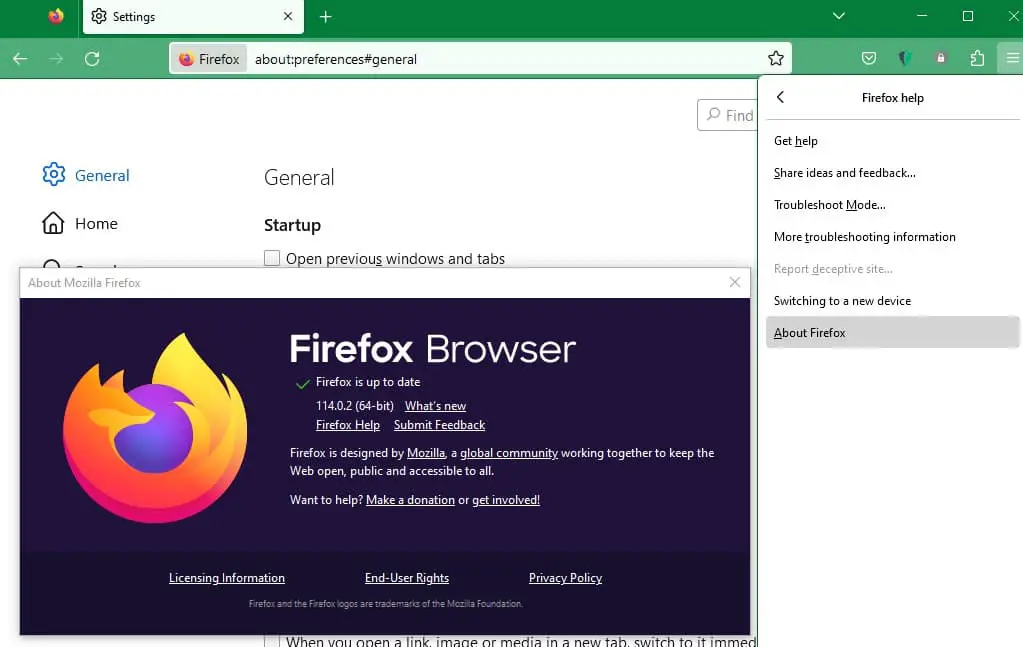
- Once the update is complete, click on the “Restart to update Firefox” button if prompted.
Firefox will close and reopen with the updated version, Now try to open the same website to check if the problem persists.
Remove Malicious Extension or add-ons
Browser extensions or add-ons enable some extra features and extend the functionality. But if you have number of extensions installed, it might cause Firefox slow down webpage due to additional processing, increased network requests, and potential compatibility issues.
If there is some compatibility conflict between the website and add-on, it might take forever to load or might not load at all.
Try disabling add-ons temporarily.
- Open Firefox and click on the menu icon followed by Add ons and themes.
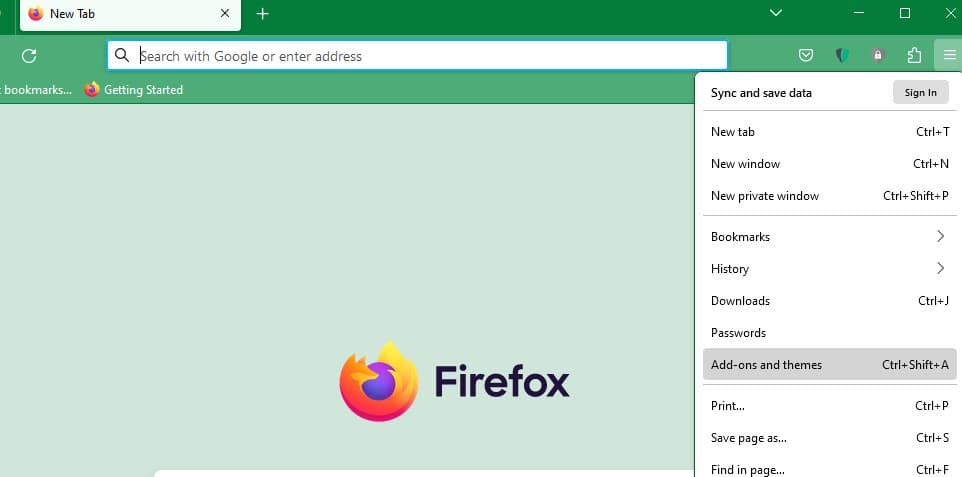
- Switch to the Extensions tab and toggle off your extensions.
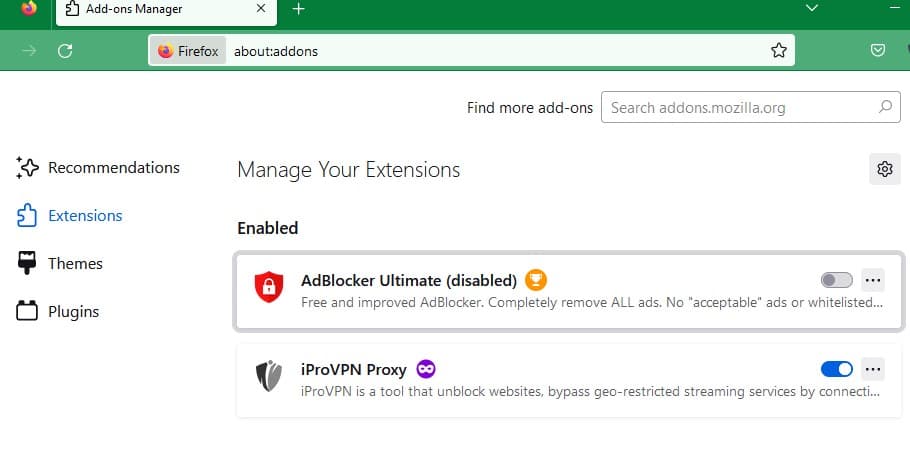
Now check if the webpage loading quickly. If yes, toggle on extensions one by one to identify which one causing the webpage loading slow.
Turn off Hardware Acceleration
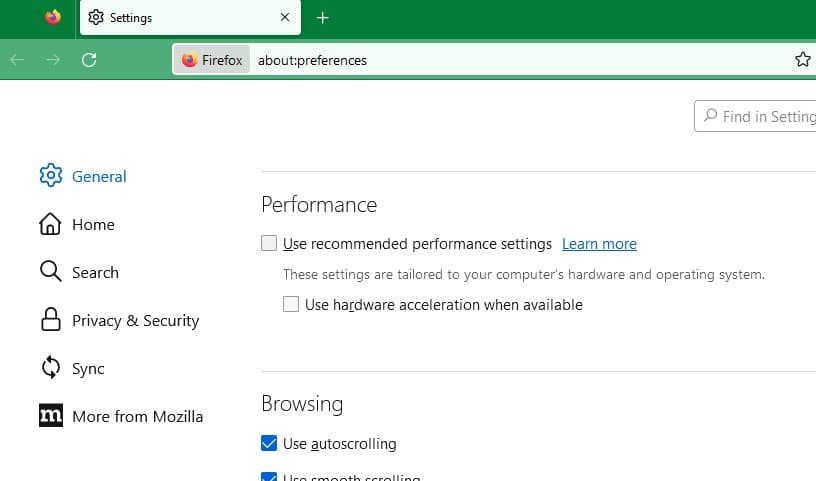
The Hardware acceleration feature help optimize browser performance by offloading graphics rendering tasks to the GPU, providing a smoother visual experience and optimizing resource usage. But sometimes it can lead to compatibility issues or conflicts with certain hardware or drivers. If you experience Firefox Keeps Freezing or takes forever to load first page Disabling hardware acceleration allow Firefox to rely more on software rendering, which can potentially resolve slow loading issues.
- Open the Firefox browser then navigate to settings,
- Under the General tab, scroll down to the Performance heading and click the check box to disable Use recommended performance settings.
- Close and re-open Firefox to check if the issue is fixed.
Change Tracking Protection
The Tracking Protection settings on Firefox prevent certain trackers from loading, potentially improving webpage loading times. But aggressive tracking protection settings may occasionally cause some websites to behave differently or not load certain content properly.
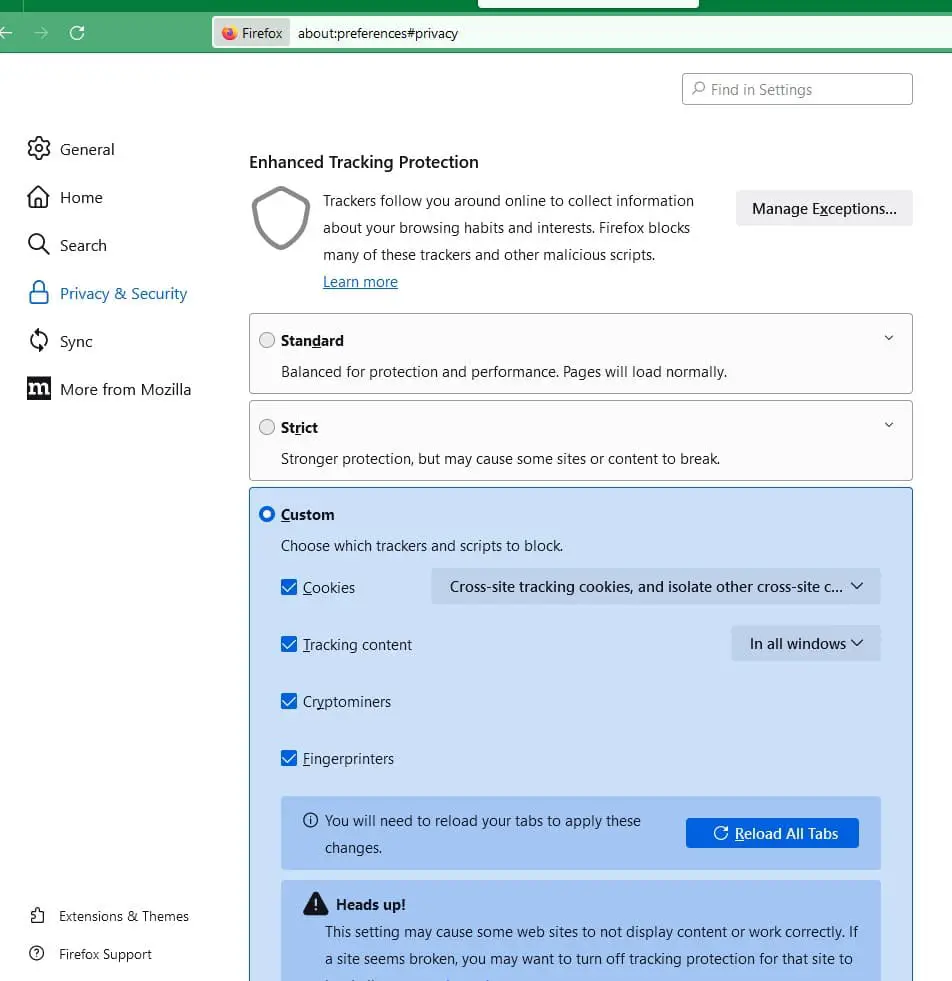
- Open Firefox settings and switch to the Privacy & Security tab.
- Also, you can type about:preferences#privacy on address bar and press enter key
- Here Under the “Enhanced Tracking Protection” section, you’ll find three options: “Standard,” “Strict,” and “Custom.”
- By default, Firefox uses the “Standard” setting, which blocks known trackers.
- The “Strict” setting offers more comprehensive tracking protection but may potentially affect the loading of some websites.
- Choose Custom settings to manually configure which trackers to block or allow.
Make sure the Tracking content box is checked and In all windows is selected now Click the Reload All Tabs button. It should solve your problem immediately.
Refresh Firefox Browser
If the above solutions didn’t fix the problem still firefox keeps freezing, running slow or takes forever to load web pages. Refreshing Firefox can help resolve slow loading problems. It restores Firefox to its default state, removes extensions and themes, and disables custom settings that might be causing the slow loading
- Open the Firefox browser, and click the menu button located at the top right corner.
- Select “Help” and then click on “More Troubleshooting Information.”
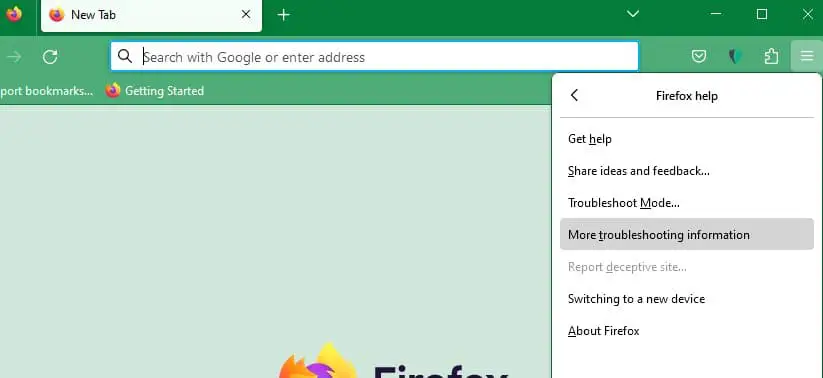
- Here In the upper-right corner of the page, you’ll find a “Refresh Firefox” button. Click on it.
- A confirmation prompt will appear. Click on “Refresh Firefox” again to proceed.
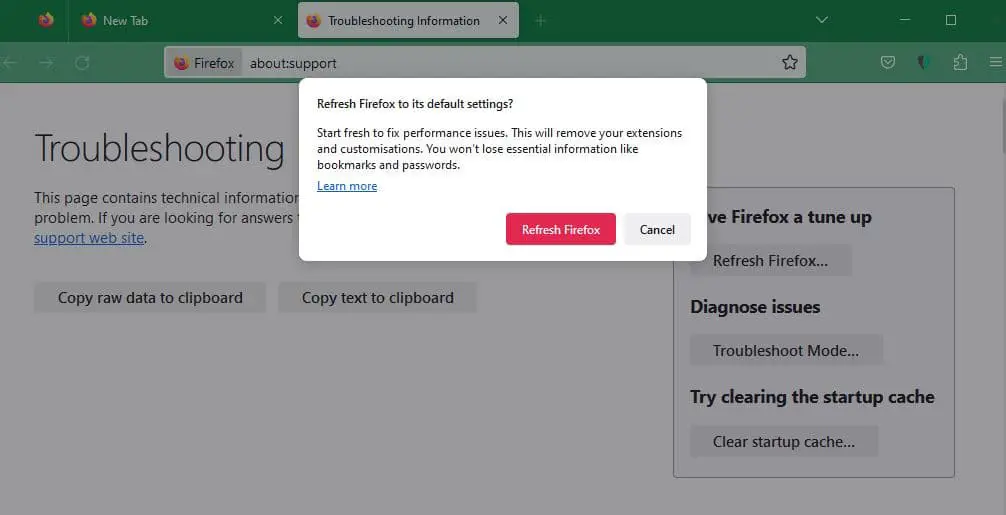
Firefox will close and reopen with default settings while preserving your essential information such as bookmarks and passwords.
Also read:
- 6 ways to fix Firefox not working or loading on Windows 11
- Mozilla Firefox Not Responding on Windows 11 (7 Solutions)
- How to Fix Firefox Memory Leak Issue in Windows 10/11
- [solved] System Restore Did Not Complete Successfully Windows 11
- How to Fix Windows 11 Boot Loop after update
- Are VPNs Legal In My Country? Let’s Break That Down